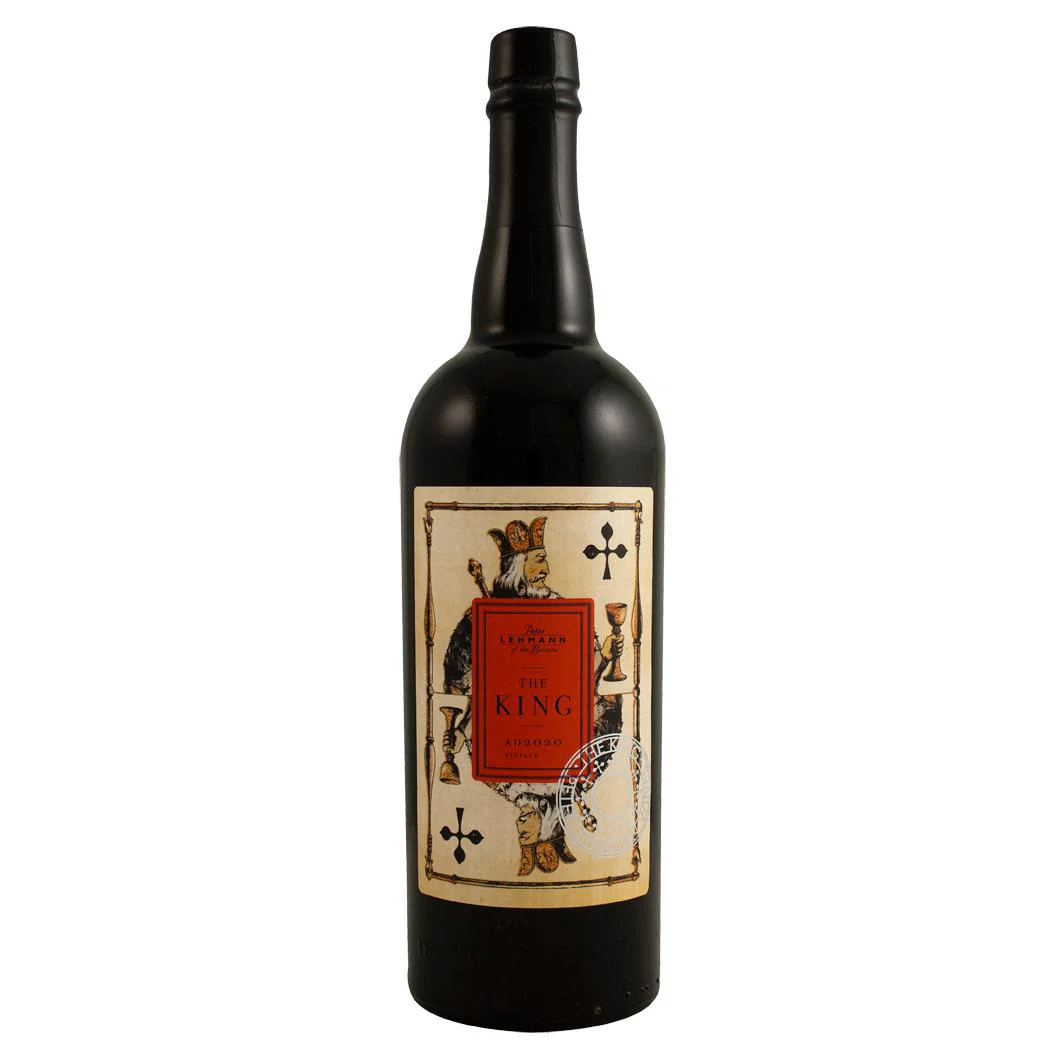
Peter Lehmann 'The King' Fortified 2020
Right up until the 1960s, a winemaker in Australia was judged on his ability to produce liqueur wines, types that mimicked port, sherry and madeira. These were the wines that consumers demanded and on which the wineries had based their existence. Today, these types of wine no longer matter, but Peter Lehmann has maintained the tradition and produces a few casks of liqueur wines from each vintage each year. The King consists of 63% Cabernet Sauvignon and 37% Touriga Nacional. The latter grape variety is precisely one of the grape varieties used in Portugal for the production of Vintage Ports. The wine ferments for the first 4 to 5 days together with the skins, after which brandy is added so that the fermentation stops and the natural sugar content is preserved. Subsequently, the wine lies with the skins for another 10 days, before it is cleared and transferred to old oak barrels, where it is stored for 12 months. Finally, after bottling, the bottles are stored for 6 to 7 years in the cellars before being released for sale. A process that is broadly similar to the one used for Vintage Port. It is tradition that the label indicates both the year of harvest and the year in which the wine peaks, and tradition believes it is always stated as 21 years after the year of harvest. Pomegranate red color and a nose of ripe cherries and dried fruits. Soft and full-bodied taste of figs and plums as well as a tight and dry aftertaste. that the label indicates both the harvest year and the year in which the wine peaks, and according to tradition, it is always stated as 21 years after the harvest year. Pomegranate red color and a nose of ripe cherries and dried fruits. Soft and full-bodied taste of figs and plums as well as a tight and dry aftertaste. that the label indicates both the harvest year and the year in which the wine peaks, and according to tradition, it is always stated as 21 years after the harvest year. Pomegranate red color and a nose of ripe cherries and dried fruits. Soft and full-bodied taste of figs and plums as well as a tight and dry aftertaste.
Product Information
Product Information
Shipping & Returns
Shipping & Returns
Description
Right up until the 1960s, a winemaker in Australia was judged on his ability to produce liqueur wines, types that mimicked port, sherry and madeira. These were the wines that consumers demanded and on which the wineries had based their existence. Today, these types of wine no longer matter, but Peter Lehmann has maintained the tradition and produces a few casks of liqueur wines from each vintage each year. The King consists of 63% Cabernet Sauvignon and 37% Touriga Nacional. The latter grape variety is precisely one of the grape varieties used in Portugal for the production of Vintage Ports. The wine ferments for the first 4 to 5 days together with the skins, after which brandy is added so that the fermentation stops and the natural sugar content is preserved. Subsequently, the wine lies with the skins for another 10 days, before it is cleared and transferred to old oak barrels, where it is stored for 12 months. Finally, after bottling, the bottles are stored for 6 to 7 years in the cellars before being released for sale. A process that is broadly similar to the one used for Vintage Port. It is tradition that the label indicates both the year of harvest and the year in which the wine peaks, and tradition believes it is always stated as 21 years after the year of harvest. Pomegranate red color and a nose of ripe cherries and dried fruits. Soft and full-bodied taste of figs and plums as well as a tight and dry aftertaste. that the label indicates both the harvest year and the year in which the wine peaks, and according to tradition, it is always stated as 21 years after the harvest year. Pomegranate red color and a nose of ripe cherries and dried fruits. Soft and full-bodied taste of figs and plums as well as a tight and dry aftertaste. that the label indicates both the harvest year and the year in which the wine peaks, and according to tradition, it is always stated as 21 years after the harvest year. Pomegranate red color and a nose of ripe cherries and dried fruits. Soft and full-bodied taste of figs and plums as well as a tight and dry aftertaste.