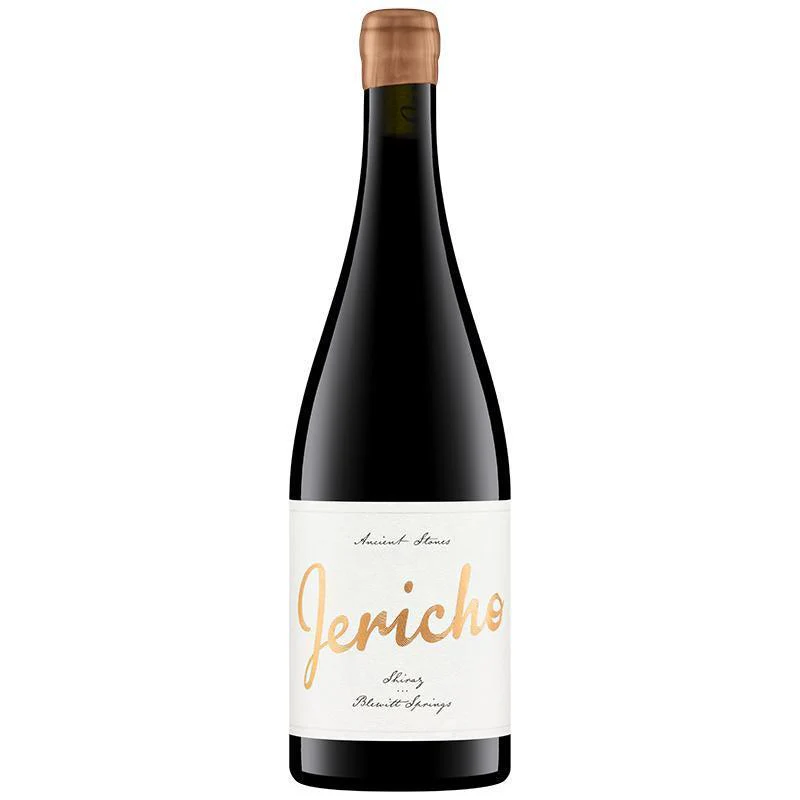
Jericho ‘Ancient Stones’ Shiraz 2021
The vinification of this wine involves removing the heads from 6 French oak barrels to crush the Shiraz directly into these vessels for fermentation. Once the sugar has fermented to alcohol, we carefully drain the free run out of the barrels, before gently manouevring the hoops from the body of the barrels, and carefully slotting the heads back in. At this stage, the barrels are sealed back up for a further 270 days before pressing. This long, arduous process ultimately results in a fine, ethereal wine, by allowing contact between the wine and the skins to resolve tannins and stabilise colour.
The extended maceration process used here keeps the skins and seeds in contact with the wine for far longer than the typical 7 to 10 days that a red wine would spend on skins. The skins and seeds of a grape are where the phenols are located; these are the molecules that give wines their colour and tannin structure. As you would expect, the longer the skins are in contact with the wine, the more tannin content in the resulting wine. Curiously, this doesn’t actually make the wines taste more tannic, as these molecules are polymerising (binding up to become larger) during this process, which actually makes the wine appear smoother, and more elegant.
Product Information
Product Information
Shipping & Returns
Shipping & Returns
Description
The vinification of this wine involves removing the heads from 6 French oak barrels to crush the Shiraz directly into these vessels for fermentation. Once the sugar has fermented to alcohol, we carefully drain the free run out of the barrels, before gently manouevring the hoops from the body of the barrels, and carefully slotting the heads back in. At this stage, the barrels are sealed back up for a further 270 days before pressing. This long, arduous process ultimately results in a fine, ethereal wine, by allowing contact between the wine and the skins to resolve tannins and stabilise colour.
The extended maceration process used here keeps the skins and seeds in contact with the wine for far longer than the typical 7 to 10 days that a red wine would spend on skins. The skins and seeds of a grape are where the phenols are located; these are the molecules that give wines their colour and tannin structure. As you would expect, the longer the skins are in contact with the wine, the more tannin content in the resulting wine. Curiously, this doesn’t actually make the wines taste more tannic, as these molecules are polymerising (binding up to become larger) during this process, which actually makes the wine appear smoother, and more elegant.